Healing
Supporting those with lived and living experience
Suicide Bereavement Support Group
- This group is for those 18 years of age and older who are grieving the loss of a loved one to suicide.
- The group meets in Brandon, once per month, and is held in the evening from 7:00 to 8:30 p.m.
- The group usually meets on the second last Wednesday of the month from September through June.
- A virtual option to join the group is available for those who may be at a distance; have to contend with weather and/or road conditions; or have obligations that make it difficult to attend in person.
- A lending library of books related to grief and loss is available to support individuals and families on their grief journey.
For more information about the group or to join/attend, please send an email to: brandonareaSBSG@gmail.com and a Group Facilitator will connect with you.
Recovery Champions
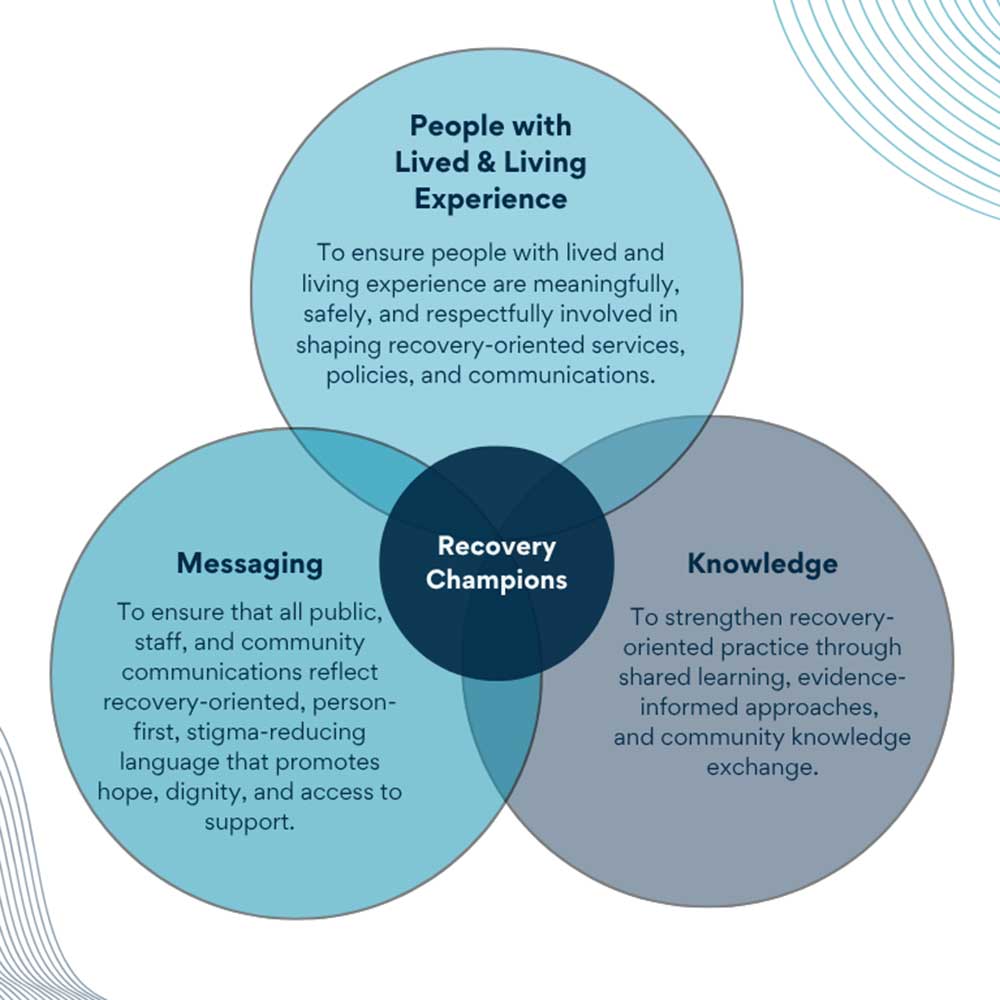
We are a committee of Prairie Mountain Health staff, community partners, people, and families with lived and living experience working to ensure services are recovery oriented. Our committee consists of three working groups including Knowledge, Messaging and People with Lived and Living experience. We welcome members who have personal experience with mental health and/or addiction challenges, either their own or through someone they care about. People from all programs and organizations are encouraged to join. If you are passionate about making services more hopeful, respectful, and person-centered we would love to have you join us!
Recovery Champions – Pathways to Tomorrow (PDF)
Contact Us
Email: RecoveryChampions@pmh-mb.ca
Phone: 1-877-509-7852
Resources
MHCC Recovery Guidelines

Recovery 101 - Well Central

Recovery 101 Course Content Booklet
Grief
Confidential and free, MyGrief.ca helps you to understand and move through your grief. In your own place, at your own pace. Developed by people who have “been there” and grief specialists. Features “real life” stories and experiences. A resource for professionals.
When Someone Dies by Suicide
A death by suicide is often sudden or unexpected, and hard to understand. Your grief is likely to be different from what you may have experienced after other losses. It may be more complicated because of unanswered questions; intense feelings of regret, anger, or guilt; and a lack of support. In addition to emotional upheaval, your life and relationships with others may change. Some of your beliefs about the person who died, yourself, or life in general may be challenged. Finding ways to cope with your grief and get the support you need is essential to your health and well-being.

Kids and Grief
What do I tell the kids? How do I support them? KidsGrief.ca is a free online resource that helps parents support their children when someone in their life is dying or has died. It equips parents with the words and confidence needed to help children grieve life’s losses in healthy ways.
Services
Prairie Mountain Health Community Mental Health and Addictions Intake

West Region Treaty 2 + 4 Health Services
Peer Connections
Peer support is a vital component of the recovery journey for individuals facing mental health and substance use challenges. It offers empathy, validation, and hope from those with lived experience. By sharing their own journeys, Peer Supporters provide a unique perspective and valuable support. Peer support addresses social isolation, breaks down stigma, and fosters open conversation. It complements other treatments and guides individuals towards recovery and wellness. The importance of lived experience cannot be overstated, as it brings understanding, relatability, and a sense of connection. Peer support plays a significant role in promoting resilience, fostering connections, and enhancing overall well-being.

Community Mental Health Association
CMHA is also known as a place to contact when you are seeking supports and services but aren’t sure where to turn. Through our Service Navigation Hub and the Mental Health Resource Guide, we listen to your concerns and link you with the best available service or support. Last year the service assisted over 2500 individuals to find what they need. Since its formation, CMHA across Manitoba has contributed to and collaborated with many organizations and groups in the area of mental health, substance use, housing, employment and disability/accessibility issues with the goal to improve the quality of life for people living with mental health problems and substance use challenges.
Alcoholics Anonymous (AA)
Alcoholics Anonymous is a fellowship of people who share their experience, strength and hope with each other that they may solve their common problem and help others to recover from alcoholism. The only requirement for membership is a desire to stop drinking. There are no dues or fees for A.A. membership; we are self-supporting through our own contributions. A.A. is not allied with any sect, denomination, politics, organization or institution; does not wish to engage in any controversy, neither endorses nor opposes any causes. Our primary purpose is to stay sober and help other alcoholics to achieve sobriety.

12 step programs Manitoba
Professional
Guidelines for Recovery-Oriented Practice
The Guidelines for Recovery-Oriented Practice is the first comprehensive Canadian reference document for understanding recovery in practice and promoting a consistent application of recovery principles across the country at a policy, program and practice level. The release of the Guidelines is another significant milestone in taking action on Changing Directions, Changing Lives: The Mental Health Strategy for Canada. Recovery means living a satisfying, hopeful, and meaningful life, even when there may be ongoing limitations related to mental health problems and illnesses. It starts with the fundamental belief that not only is recovery possible, it should be expected regardless of diagnosis or situation. While the Guidelines are directed at a wide audience that includes people living with mental health problems and illnesses and their families, they are designed especially for practitioners, managers, administrators, and policy- and decision-makers who can help make the practical, organizational and cultural shifts needed to develop a truly recovery-oriented mental health system.

Putting Recovery Into Practice
This introduction summarizes the Guidelines and gives an overview of recovery-oriented principles and what they look like in practice. It is meant for all organizations, whether they are just starting to think about adopting a recovery-oriented approach or have already done significant work in this area.

Recovery-oriented practice An implementation toolkit
This toolkit was created to help those who provide mental health and substance use services and supports adopt the Guidelines into their unique workplace contexts and practices. It gives practical examples of how the core recovery principles show up in organizations through policies, programs, and practices.
Recovery Oriented Language Guide
Mental Health Coordinating Council developed the first Recovery Oriented Language Guide in 2013 because language matters. The Guide continues to be important in the context of mental health, where words can convey hope, optimism and support, and promote a culture that fosters recovery and wellbeing. The Recovery Oriented Language Guide is recognised as a valuable resource widely used across mental health and human services in Australia and overseas. This edition includes updates to reflect contemporary language use, introduces diversity inclusive language and incorporates new topics, including talking about grief and loss, and recovery language usage in the written word cover oriented Language Guide.